

Bibliography

Botany & other stories’ Book of the Month: October 2026
The Gaia Atlas of Planet Management
For Today’s Caretakers of Tomorrow’s World
edited by Norman Myers (Pan Books, 1985; other editions 2000, 2005)
This book is a guide to a planet in critical transition. The facts of our situation and our options for tomorrow are presented with a wealth of maps, data, vivid graphics, and authoritative texts by leading thinkers on these crucial environmental, political and social issues.
BOTANY and other stories offers a selection of books, below, which give an overall picture of the crucial issues our world is facing and alert the reader to the harmful effects of our way of life. They also depict the beauty of this world and demonstrate why it needs to be preserved. At all costs. And right now.
-

Merchants of Doubt
How a Handful of Scientists Obscured the Truth on Issues from Tobacco Smoke to Global Warming
by Naomi Oreskes and Erik M Conway (Bloomsbury, 2011)
Merchants of Doubt tells the controversial story of how a loose-knit group of high-level scientists and scientific advisers with connections in politics and industry ran effective campaigns to mislead the public and deny well-established scientific knowledge over four decades. The same individuals who claim that the science of global warming is ‘not settled’ have also denied the truth about studies linking smoking to lung cancer, coal smoke to acid rains, and CFCs to the ozone hole.
Naomi Oreskes and Erik M Conway are specialists of the history of science and technology.
-

The Invention of Nature
The Adventures of Alexander Von Humboldt, The Lost Hero of Science
by Andrea Wulf
(John Murray, 2015)
In her biography of Alexander Von Humboldt (1769–1859), Andrea Wulf follows the footsteps of the worldwide-known German explorer, geographer, naturalist and writer. She relates his travels from the legendary climbing of the volcano Chimborazo in Peru to the crossing of the Mongolian border, his scientific researches in Berlin, London, Paris and his meetings with the brightest minds of his time from Goethe to Darwin. This relentless worker has revolutionised the way we see the natural world: “In this great chain of causes and effects, Humboldt said, no single fact can be considered in isolation.”
-
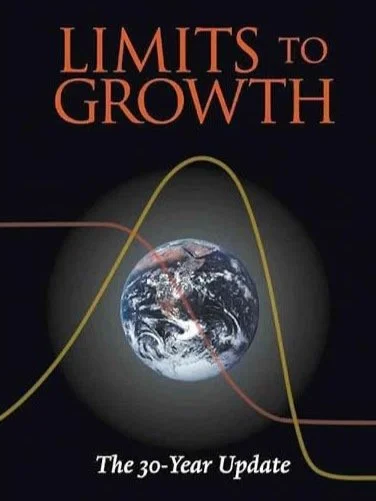
Limits to Growth: The 30-Year Update
by Dennis Meadows, Donella Meadows and Jorgen Randers
(Earthscan, London. Sterling, VA 2004)Limits to Growth (also known as the Meadows Report) was first published in 1972. It was written by three researchers of the Massachusetts Institute of Technology, Dennis and Donella Meadows and Jorgen Randers, at the request of the Club of Rome. This report demonstrates that an exponential growth in a limited world is doomed to failure. And that unless efficient steps are taken it will be the end of our planet “sometime within the next 100 years.”
-

Plant: Exploring the Botanical World
edited by Phaidon (Phaidon, 2016)This visually stunning book features more than 300 outstanding works of art from all cultures and periods – from ancient stone carvings, medieval manuscripts and watercolours to photographs, sculpture and cutting-edge micrograph scans. These works have been carefully chosen by an international panel of experts and are supported by key reference information. But above all, they are arranged in pairs which create thoughtprovoking juxtapositions and offer a highly stimulating aesthetic pleasure. Like the Lavender painted by Davis Kandel in 1546 which is confronting the image of a Cannabis plant which Ted Kinsman created with a micrograph scan in 2014. It is a refreshing way of redefining our ideas of what constitutes ‘botanical art’.
-

Empire of Things
How We Became a World of Consumers, From the 15th Century to the 21st
by Franck Trentmann
(Penguin Random House, 2016)
In Empire of Things, the historian Franck Trentmann gives a highly documented account of consumerism throughout the ages, from Renaissance Italy and late Ming China to today’s shoppers. He shows that it is “a truly global phenomenon with a much longer history that we realise”. He also demonstrates that consumption is more than ever rampant in our throwaway society: “How much and what to consume is one of the most urgent but also thorniest questions of our day.”
-

Rape of the Fair Country
by Alexander Cordell(Blorenge Books, 1959)
Set in the times of the Industrial Revolution in 19th century Wales, this gripping novel gives an unflinching look at the plight of the iron making communities of Blaenavon and Nantyglo where children aged 5 had to get up at “first light while the brats of ironmasters eat at eight before riding” and go to work “crawling through the galleries where the masters would not rear their pigs”. It also describes accurately the birth of the Chartist movement and of Trade Unionism in Wales. The book, which became a bestseller translated into 17 languages, shows that, undisputedly, the way we treat people and the way we treat nature go hand in hand. At all times.
-
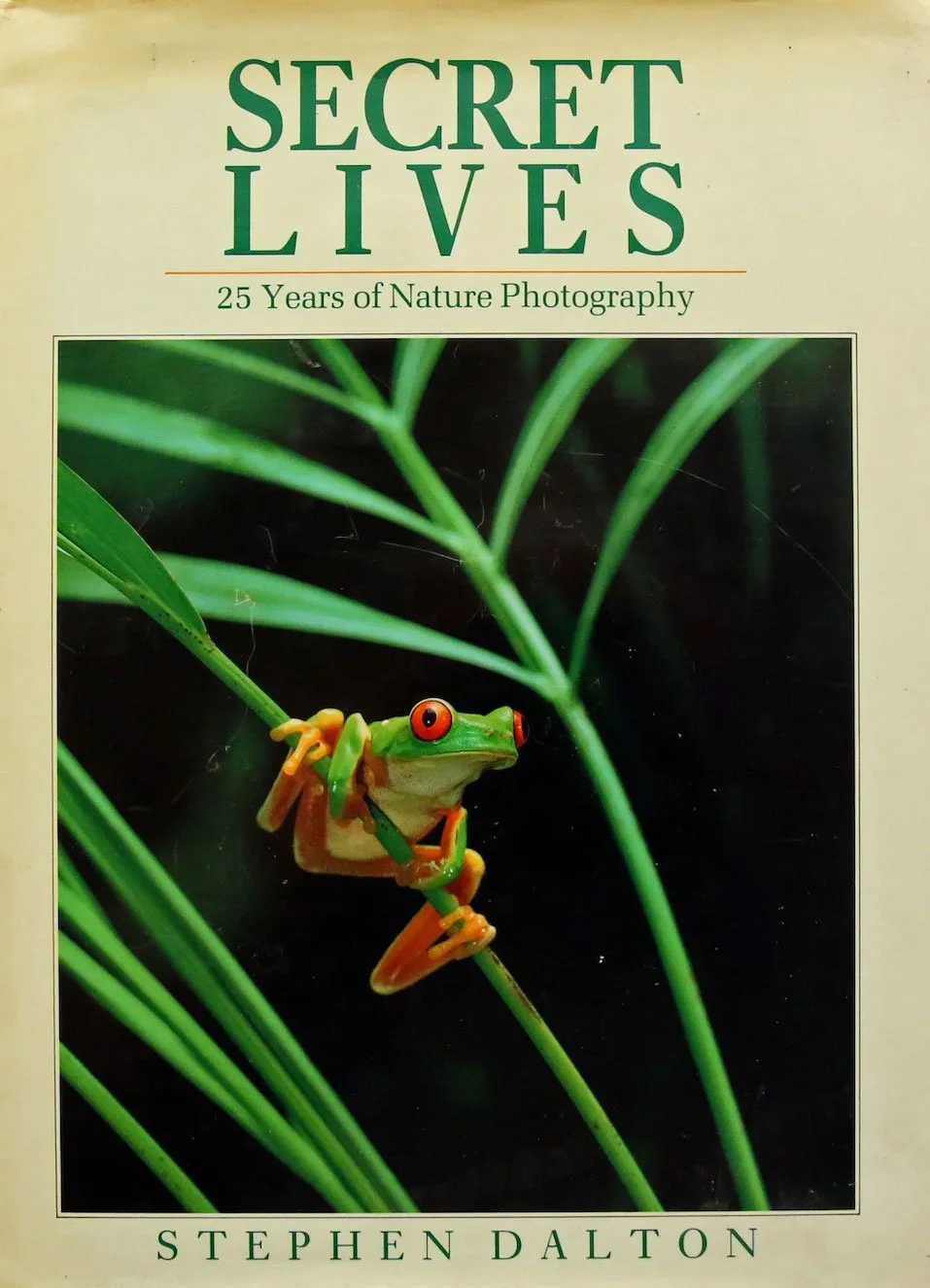
Secret Lives
25 Years of Nature Photography
by Stephen Dalton
(Century, 1988)
Secret Lives is a personal selection of one of the world’s greatest wildlife photographers. Whether it is the exquisite blue of a birds-eye speedwell, the cloud of spores leaving the cap of a puffball or the enigmatic smile of an intriguing horned frog, it is each time the beauty and the complexity of any form of life which is captured.
-

Lost Woods
The Discovered Writing of Rachel Carson
edited by Linda Lear
(Beacon Press, Boston, 1998)
In Lost Woods, Linda Lear has collected and edited the writings, speeches, quotes and letters written by the great American scientist and writer Rachel Carson (1907–1964). Rachel Carson is famously known for her book Silent Spring (1962) which had a powerful impact on the environmental movement. She spent her life working relentlessly to describe and defend nature and its beauty. In her anthology, Linda Lear explains that ”Carson’s public and private voice speaks to our human condition and to the condition of our earth at the end of the millenium”.
-

Climate Changed
A Personal Journey Through the Science
by Philippe Squarzoni
(Abraham Comics Art, 2014)
This black and white graphic novel, written and illustrated by Philippe Squarzoni, was first published in French in 2012 under the title Saison Brune. It weaves together scientific research and interviews with experts to decipher the complexity of what is called ‘climate change’. It also “describes the author’s own struggles and personal choices while confronting the issue”. Whether he draws the streets of a busy city or the branches of a tree covered with snow, Philippe Squarzoni has the eyes of a true cineaste: the flow of his pictures, page after page, always brings a surprise.
-

Silent Spring
by Rachel Carson(1962)
Rachel Carson wrote this book to expose the deadly danger of pesticides, above all DDT, for the health of nature and of humans. She was fiercely attacked by the chemical firms which produced the pesticides, but the publishing of the book resulted in a national ban of DDT for agricultural uses.
-

The Brother Gardeners
Botany, Empire and the Birth of an Obsession
by Andrea Wulf
(William Heinemann, 2008)
Without the achievements of Miller, Collinson, Bertram, Linnaeus, Solander and Banks, England would not have become such a nation of gardeners. Through the story of these men, of their friendly or rival relations, Andrea Wulf explains how, in the eighteenth and the beginning of the nineteenth centuries England became the centre of a great trade of plants coming from the worldwide, circulating on the seas at the rhythm of explorations (James Cook’s travels) and colonisation.
-

Hot Air
The Inside Story of the Battle Against Climate Change Denial
by Peter Stott
(Atlantic Books, 2021)
Peter Stott is a Science Fellow in Climate Attribution at the Met Office Hadley Centre. As such he is one of the scientist members of the United Nations Intergovernmental Panel on Climate Change (IPCC) which determine the state of the climate change on the planet. In Hot Air, he describes the negotiations – and the fights – led behind the scenes to reach an agreement before the publication of the reports of the IPCC.
-

The Sea Trilogy
Under the Sea-Wind (1941)
The Sea Around Us (1951)
The Edge of the Sea (1955)by Rachel Carson (1907–1964)
This trilogy about the sea established Rachel Carson not only as an expert in marine biology, but as a great conservationist and a great writer.
The Sea Around Us was a great success, and was reissued in 1962 with a new foreword in which Carson underlined the threat of the nuclear waste disposal areas at the bottom of the oceans.
-

The Great Hunger
The Famine in Ireland (1846–1851)
by Cecil Woodham-Smith
(Hamish Hamilton, 1962)
In this book, the historian and biographer Cecil Woodham-Smith (1896–1977) examines the disaster caused by the potato blight in Ireland in 1846. Potatoes were the main, if not the only, food for the peasants, particularly in the west of the country. 2.5 million Irish people died from starvation and from typhus or migrated, mainly to North America (a lot of these migrants died during the journey or on arrival in Canada or the United States).
-

Rachel Carson: Witness for Nature
by Linda Lear(Mariner Books, Houghton Mifflin Harcourt, 1997)
In this book, Linda Lear, an historian of science, explores the life of the famous environmentalist (1907–1964). She describes her early attraction to the study of nature. Her studies in Connecticut were shared between her love of writing and her passion for biology and science. As a sea biologist, Rachel Carson explored all the coasts of the United States, mainly the eastern ones. As a writer, she described the beauty of nature and the reasons to protect it.
Linda Lear also shows Carson’s personality: passionate and straightforward, very firm in her convictions, hard-working, always connecting with her colleagues in the scientific community, conscious of her value but no egotist, truthful in her professional and personal friendships. She was also very brave, whether taking charge of her family, confronting the lobbyists who raged against her or standing up to the cancer which eventually killed her at 57 years old.
-

The Sense of Wonder
by Rachel Carson(1965; Harper Perennial, 1998)
In her foreword Linda Lear, Rachel Carson's biographer, writes: “The Sense of Wonder is Rachel Carson’s gift to the remembered child in all of us.”
In this short essay first published in a newspaper in 1956 and edited posthumously as a book in 1965, Rachel Carson relates how children and adults can discover together the wonders of nature; but she also warns grown-ups against interfering in children’s fresh and spontaneous curiosity.
She describes mainly her walks around her cottage in coastal Maine with her grand-nephew and adopted son Roger: on the beach along the water’s edge, in the woods during a rainy day, through the dawn to enjoy the chorus of birds in spring or at night to hear the voices of migrant birds.
The edition published in 1998, with photographs by Nick Kelsh, includes the following advance notice: “Rachel Carson intended to expand The Sense of Wonder but time ran out before she could. She also intended a dedication and so: This book is for Roger.”
-

The Invisible Killer
The Rising Global Threat of Air Pollution – and How We Can Fight Back
by Gary Fuller
(Melville House UK, 2018)
An air pollution scientist at King's College London, Gary Fuller led the development of the London Air Quality Network. And clearly he knows his subject.
He remembers the first pioneers who studied the composition of air and tested its effects on human health. But as he writes, “This book allows us to look backwards in order to look forward.” Therefore, after having reviewed the impact of air pollution on human health and on the economy and the battles to improve the quality of air, he underlines the actual challenges and questions all the protagonists: the politicians who should make more regulations, the businessmen and their polluting factories, the farmers and their pesticides. But he questions also the common people and their way of life: the use of the car even for very short hauls, the purchase of toxic products, etc. He shows how the problem is complex and how it is necessary to keep an overall picture and an holistic point of view to try and resolve this problem which is threatening the life of the planet and its inhabitants.
-

Our Fragile Moment
How lessons from the Earth’s past can help us survive the climate crisis
by Michael Mann
(Scribe, 2023)
In his recent book, Michael Mann, professor and director for Science, Sustainability and the Media at the University of Pennsylvania (USA), relates the great episodes of the Earth’s climate history since its apparition 4.5 billion years ago, marked by global warming, great drying, cooling and icy episodes. He explains the reasons for these climate changes, lists the consequences and learns from these events to provide an insight into today’s climate crisis.
Human civilisations have existed for only about 6,000 years, 0.0001% of Earth’s history. Michael Mann thinks that human beings are responsible for the global warming which threatens this ‘fragile moment’. He is therefore a target for climate change deniers. But he cautions also against ‘doomism’ which argues there is no hope to stop the destruction of the Earth. And he underscores “the urgency of the actions to mitigate and adapt to the heightening climate crisis we face and the agency that we still possess in averting disaster.”